6 Minute Read

Sports lighting must deliver enough illumination for athletes to track the ball, spectators to follow the action, and facilities to operate safely after dark. But the light should stay where it belongs.

For sports facilities near homes, roads, parks, or other sensitive areas, controlling unwanted light has become an important part of outdoor sports lighting design. Communities may have concerns about light spill, glare, skyglow, and sports lighting shining into neighboring properties.

Fortunately, reducing light spill does not mean sacrificing field performance. Modern sports field LED lighting, precise fixture optics, controlled aiming, shielding, and photometric planning can work together to illuminate the playing surface while limiting unwanted light beyond the property.

Key Takeaways

Controlling sports lighting light spill starts with the overall lighting design, not simply the fixture. A well-designed system considers how every component affects both field performance and the surrounding area.

How can sports facilities keep more light on the field?

    • Select precise LED optics that keep illumination within the intended area.
    • Control fixture aiming to reduce unnecessary high-angle light.
    • Use shielding or asymmetric distributions near sensitive property boundaries when appropriate.
    • Model illumination at property lines before installation.
    • Evaluate light spill at property boundaries and other sensitive areas.
    • Verify fixture aiming during installation and after future maintenance.

What Is Light Spill?

Light spill is light that falls outside the area intended to be illuminated. It is also commonly called light trespass or light intrusion when unwanted light extends onto neighboring properties. DarkSky International identifies light trespass as one component of light pollution, alongside issues such as glare and skyglow.

On a sports field, the primary target is the playing surface. Light that extends beyond the field, property boundary, or another defined limit may be considered unwanted spill.

Sports lighting light spill can create several problems:

    • Light entering nearby homes or windows
    • Unwanted illumination on neighboring properties
    • Wasted energy from lighting areas that do not need illumination
    • Increased skyglow and sports field light pollution
    • Potential effects on nearby wildlife and nighttime environments
    • Community complaints or challenges during project approval

For outdoor sports facilities, light spill is an important design consideration because high-output lighting systems operate near property lines, roadways, homes, and natural areas. Understanding where unwanted light travels and how much reaches surrounding areas is an important part of evaluating the overall impact of a sports lighting system.

What Causes Light Spill in Sports Lighting?

Light spill typically results from a combination of fixture selection, placement, aiming, and overall system design.

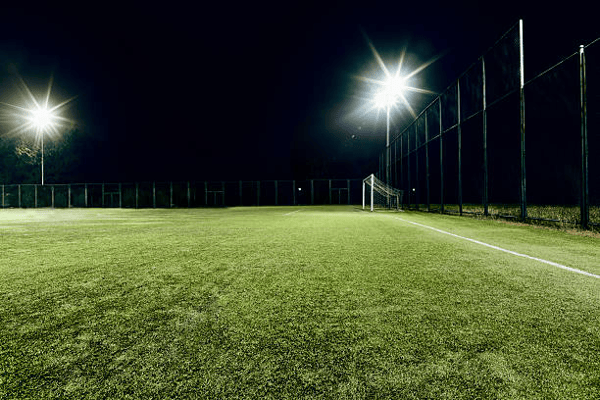
A sports luminaire with a beam that is too wide may send significant light beyond the playing surface. Fixtures that are poorly positioned or aimed too high can also direct illumination toward surrounding properties or into the night sky.

Because fixture performance depends on the entire lighting system, light spill is rarely caused by a single component. Optical distribution, fixture positioning, aiming, and required light levels work together to determine how much light remains within the intended area.

This makes controlling light spill a design consideration from the beginning of a sports lighting project, rather than an issue that can be addressed by fixture specifications alone.

How Do You Reduce Light Spill on Sports Fields?

Effective light spill control starts during the lighting design process. Each component of the system affects how successfully the design keeps illumination within the intended area.

Design Factor

How It Helps Control Light Spill

What Designers Evaluate

Fixture Optics

Concentrates light on the playing surface

Beam distribution and field dimensions

Aiming

Controls where fixture output is directed

Aiming points and high-angle light

Shielding

Blocks or redirects unwanted light

Property lines, homes, roads, and sensitive boundaries

Fixture Positioning

Creates effective angles for illuminating the field

Location, mounting height, field geometry, and obstructions

Photometric Analysis

Predicts potential off-site illumination

Field performance and property-line light levels


Select Precise Fixture Optics

Fixture optics control how light leaves the luminaire and reaches the playing surface.

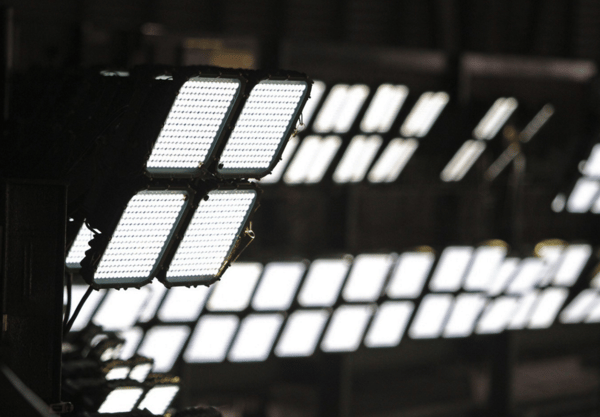
Modern LED sports lighting systems can offer multiple optical distributions for different field layouts and lighting requirements. Instead of flooding a broad area with light, designers can select distributions that concentrate illumination within the intended area and reduce unnecessary light beyond field boundaries.

Control Fixture Aiming Angles

Aiming determines where each fixture sends its light.

Fixtures aimed at aggressive angles can create high-angle light that travels beyond the field. Instead, designers should select fixture locations, optics, and aiming points that deliver the required illumination while limiting light outside the target area.

This becomes especially important for sports lighting near residential areas. Fixtures along sensitive boundaries may require tighter distributions or different aiming strategies than fixtures located farther from neighboring properties.

Fixtures along sensitive boundaries may require tighter distributions or different aiming strategies than fixtures located farther from neighboring properties.

Use Shielding Where Necessary

Sports lighting shielding provides another layer of control.

Shields, visors, baffles, and similar accessories can block or redirect light that would otherwise travel beyond the intended area. They can be particularly useful on fixtures facing property lines, nearby homes, roadways, or other sensitive locations.

In some designs, asymmetric optical distributions can also help limit backlight along a perimeter.

Shielding should complement proper fixture selection and aiming rather than compensate for a poorly designed system.

Consider Fixture Positioning and Mounting Height

Fixture positioning and mounting height influence the angles required to deliver light across the playing surface. For example, mounting fixtures too low may require more aggressive aiming to reach distant portions of a field, potentially increasing unwanted light beyond the target area.

There is no universal pole configuration or mounting height that minimizes light spill. Designers should evaluate these factors alongside field dimensions, fixture optics, surrounding properties, and performance requirements.


Simplify Your Sports Lighting Project with Expert Design and Supply Services

Stouch Lighting provides comprehensive sports lighting design and supply services for fields, courts, stadiums, and other athletic facilities. From photometric planning and fixture selection to product procurement and delivery coordination, our experts help create an LED lighting system that supports visibility, uniformity, efficiency, and long-term performance.

Planning a new installation or upgrading outdated sports lighting? Explore our services to see how we can help you develop a solution tailored to your facility, level of play, and project requirements.

👉 Explore Our Sports Lighting Services

👉 Tell Us About Your Upcoming Projects


What Is the Difference Between Light Spill and Glare in Sports Lighting?

Light spill and sports lighting glare are related, but they are not the same.

Light spill describes illumination reaching an area where it is not intended, such as a neighboring property. Glare occurs when excessive brightness causes visual discomfort or reduces visibility.

A sports lighting design should evaluate these conditions separately, even though some design strategies can help control both.

How Do BUG Ratings Relate to Sports Lighting Light Spill?

BUG stands for Backlight, Uplight, and Glare. The BUG rating system, defined in ANSI/IES TM-15-20, classifies how an outdoor luminaire distributes light in these three areas.

For a sports lighting project:

    • Backlight identifies light emitted behind the fixture and is particularly relevant when evaluating potential light spill toward property boundaries.
    • Uplight identifies light emitted above the horizontal plane that can contribute to skyglow.
    • Glare addresses high-angle light associated with visual discomfort.

BUG ratings provide useful information about an individual luminaire's light distribution, but they do not predict the performance of an entire sports lighting installation. A project-specific analysis is still necessary to determine how much illumination may reach surrounding properties.

Can LED Sports Lighting Reduce Light Pollution?

Yes. A properly designed LED sports lighting system can reduce light pollution by providing greater control over both light distribution and system operation.

LED systems can incorporate dimming, scheduling, and other controls that allow facilities to reduce output when full illumination is unnecessary and shut the system off when fields are not in use.

These capabilities align with IES and DarkSky International principles that emphasize appropriate light levels and limiting outdoor lighting to the times when it is needed. LED technology provides useful tools for reducing unnecessary light, but proper system design remains essential.

FAQ About Sports Lighting Light Spill

Do Local Codes Limit Sports Lighting Spill at Property Lines?

Some municipalities regulate the amount of outdoor illumination permitted at or beyond a property boundary, particularly when sports facilities are located near residential areas. Requirements vary by jurisdiction, so project teams should review applicable zoning ordinances and outdoor lighting codes early in the design process. DarkSky International also publishes resources for communities developing outdoor lighting codes intended to address issues such as light trespass, glare, and skyglow.

Can Existing Sports Lighting Systems Reduce Light Spill Without a Complete Replacement?

Sometimes. Facilities may be able to reduce existing sports lighting light spill by correcting fixture aiming, repairing or installing compatible shielding, adjusting output, or modifying operating schedules. However, older fixtures with limited optical control may require an LED retrofit or broader redesign to achieve a significant improvement.

Should Sports Lighting Light Spill Be Verified After Installation?

Yes. Post-installation verification can confirm that the completed sports lighting system performs according to the approved design. Even relatively small installation differences can affect how much light reaches residential property lines and other sensitive boundaries.

Can Sports Lighting Light Spill Increase Over Time?

Yes. Wind loading, structural vibration, maintenance, or accidental impact can alter a sports lighting system after installation. Damaged or misplaced shields and changes in fixture position can increase unwanted light beyond the field. Periodic verification can help confirm that the system continues performing as designed.

Keep Sports Lighting on the Field

Reducing light spill does not mean sacrificing the visibility, safety, or performance a sports facility needs. The right lighting design can provide effective illumination across the playing surface while limiting unwanted light on neighboring properties and surrounding areas.

LED sports lighting gives facilities greater control over where and when light is used, but successful light spill reduction depends on designing the system around the specific field and its surroundings.

Stouch Lighting can help you evaluate your sports lighting needs and develop a solution that balances field performance with responsible light control. Contact Stouch Lighting today to discuss your sports lighting project.