2 Minute Read

Key Takeaways

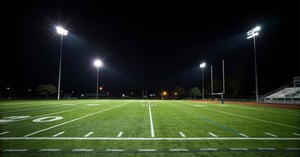
LED sports field lighting gives facility managers a measurable way to reduce operating costs, improve visibility, and simplify long-term maintenance. Compared to legacy systems, LED technology delivers higher efficiency, longer lifespan, and advanced control capabilities.

What makes LED sports field lighting a high-impact upgrade?

    • Lower energy consumption with controllable output
    • Reduced maintenance driven by longer L70 lifespan ratings
    • Improved visibility with higher CRI and better uniformity ratios
    • Instant on/off with no warm-up delays
    • Smart controls for scheduling, dimming, and automation

Why Are Facility Managers Switching to LED Sports Field Lighting?

Facility managers across schools, municipalities, and sports complexes face constant pressure to manage multiple sites with limited budgets and staff. LED sports field lighting directly addresses these challenges by reducing energy usage, minimizing maintenance requirements, and improving lighting performance.

Unlike metal halide or high-pressure sodium systems, LED lighting integrates with modern control platforms, including occupancy sensors, photocells, and centralized lighting management systems. This allows facilities to align lighting usage with actual field demand.

How Much Energy Can LED Sports Field Lighting Save?

Energy savings remain one of the most immediate benefits of upgrading to LED.

For example, a sports field with:

    • 100 fixtures
    • Operating 100 days per year
    • Running 6 hours per day
    • Electricity cost of $0.12 per kWh

Can generate approximately $5,400 in annual energy savings after switching to LED.

LED systems also support:

    • Adaptive dimming based on daylight conditions
    • Scheduled runtimes tied to events or occupancy
    • Integration with energy management systems (EMS)

These features reduce unnecessary runtime and improve overall system efficiency.


How Does LED Lighting Reduce Maintenance Costs?

Traditional lighting systems require frequent servicing and replacement, especially in high-mounted sports applications.

Metal halide systems:

    • Average lifespan around 20,000 hours
    • Significant lumen depreciation, often reaching 50% output at ~7,500 hours
    • Require costly lift equipment and labor for servicing

LED lighting improves maintenance performance through:

For facilities with fixtures mounted up to 100 feet high, this translates into substantial labor and equipment cost savings over time.

How Does LED Improve Sports Field Lighting Quality?

Lighting quality directly impacts safety, playability, and spectator experience.

LED systems provide:

    • Higher Color Rendering Index (CRI ≥70) compared to HPS (<30)
    • Improved light distribution across the field
    • Better uniformity ratios, reducing dark spots and glare

Uniformity ratios (e.g., max-to-min light levels across the field) are critical for:

    • Consistent visibility for athletes
    • Safer playing conditions
    • Compliance with sports lighting standards for competition levels

The result is a more professional lighting environment that supports both gameplay and broadcasting requirements.

What Are the Operational Advantages of LED Lighting Controls?

LED sports lighting offers significantly more control than traditional systems.

Scenario Comparison

Traditional Metal Halide System

    • Requires warm-up time before reaching full brightness
    • Must be turned on well before events
    • Operates at full output regardless of conditions
    • Limited control flexibility

LED Lighting System

    • Instant on/off operation
    • Adjustable light levels through dimming
    • Programmable schedules based on field use
    • Integration with smart controls and automation systems

These capabilities allow facilities to match lighting output to real-time needs, reducing waste and improving operational efficiency.

What Should Facility Managers Do Next?

Upgrading to LED sports field lighting is a strategic decision that impacts energy, maintenance, and performance. To move forward effectively:

    • Conduct a lighting audit to evaluate current system performance
    • Review fixture specifications, including L70 ratings and uniformity targets
    • Analyze operating hours and utility rates to estimate ROI
    • Explore available utility rebates or incentive programs
    • Partner with a qualified provider for design, installation, and controls integration

Taking these steps ensures your lighting upgrade delivers both immediate savings and long-term operational value.