9 Minute Read

Lighting has shaped how people live, work, and build for thousands of years. What began as simple fire for warmth and visibility has evolved into intelligent LED systems that communicate with building management platforms, optimize energy use, and improve occupant comfort.

The history of lighting is more than a timeline of inventions. Each breakthrough solved a problem—making lighting brighter, safer, more efficient, or easier to control. Understanding the evolution of lighting also explains why today's commercial facilities are rapidly replacing outdated technologies with LEDs and connected lighting controls.

This guide explores the history of artificial lighting, the major milestones that transformed the industry, and where lighting technology is headed next.

Key Takeaways

    • Artificial lighting has evolved from open flames to intelligent LED systems over thousands of years.
    • Every major advancement improved safety, efficiency, light quality, or controllability.
    • Electric lighting transformed commercial buildings during the late 19th century.
    • Fluorescent and HID technologies dominated commercial applications for decades before LEDs emerged.
    • Modern LED lighting delivers higher efficacy, longer lifespans, improved optical control, and digital connectivity.
    • Smart lighting controls now integrate with building automation systems to reduce energy consumption and improve facility operations.

What Is the History of Lighting?

The history of lighting is the story of humanity finding safer, brighter, and more efficient ways to illuminate homes, workplaces, streets, and cities. Early civilizations relied on fire, oil lamps, and candles before the invention of gas lighting in the 1800s. Electric lighting revolutionized illumination in the late nineteenth century, eventually leading to fluorescent lamps, high-intensity discharge (HID) lighting, and today's LED technology.

Each generation of lighting increased efficiency while reducing maintenance, operating costs, and safety risks.

Lighting Technology Timeline

Time Period

Lighting Technology

Major Innovation

Biggest Limitation

Prehistoric Era

Fire & Torches

First artificial light source

Smoke, fire hazards, poor light quality

3000 BCE

Oil Lamps

Portable, longer-lasting indoor lighting

Smoke and limited brightness

500 BCE

Candles

Cleaner, more reliable illumination

Short lifespan and low light output

1780

Argand Lamp

Improved airflow and brighter flame

Still dependent on combustible fuel

Early 1800s

Gas Lighting

Illuminated entire streets and factories

Heat, maintenance, explosion risk

1879

Incandescent Bulb

Practical electric lighting

Extremely inefficient, high heat

1930s

Fluorescent Lighting

Higher efficacy and longer life

Mercury, flicker, ballast failures

1960s–1990s

HID Lighting

High-output lighting for large spaces

Warm-up time, color shift, maintenance

1990s–Today

LED Lighting

High efficiency, long life, instant-on

Higher initial cost (now largely offset by energy savings)

Today & Beyond

Smart Connected Lighting

Sensors, automation, building integration

Requires network infrastructure and commissioning


Lighting Through the Ages: A Timeline of Innovation

Prehistoric Era: Fire Becomes the First Artificial Light

Long before electricity, humans controlled fire to extend productive hours beyond daylight.

Early civilizations relied on controlled fire, including campfires, torches, and simple fuel-burning lamps, to extend productive hours beyond daylight. While these methods enabled cooking, gathering, and early construction activities after sunset, they also produced heavy smoke, soot, and significant fire hazards. Although primitive, fire allowed communities to gather, cook, hunt, and eventually build civilizations that operated after sunset.

The biggest limitation was obvious: smoke, soot, fire hazards, and extremely poor light quality.

Around 3000 BCE: Oil Lamps Improve Indoor Lighting

As civilizations developed, oil lamps became one of the first practical indoor lighting technologies.

As civilizations developed, oil lamps became one of the first practical indoor lighting technologies. The most common fuels were olive oil in the Mediterranean and animal fats in other regions, providing a steadier, longer-lasting light than open flames. Compared to fire, oil lamps were safer, easier to transport, and better suited for homes, workshops, and public buildings. However, they still produced smoke, odors, and relatively low light levels.

Egyptians, Greeks, Romans, and other ancient civilizations refined lamp designs to burn longer and produce steadier light.

Compared to open flames, oil lamps were:

    • Safer
    • Easier to transport
    • More fuel efficient
    • Better suited for homes and public buildings

Even so, they still produced smoke, odors, and limited illumination.

Around 500 BCE: Candles Become More Practical

Candles represented another major milestone in the evolution of lighting.

Candles marked another important milestone in the evolution of lighting. The earliest candles were typically made from tallow (rendered animal fat). In contrast, beeswax candles became the preferred option for churches and wealthier households because they burned cleaner and produced less smoke. For centuries, candles illuminated homes, businesses, and public buildings before gas lighting and electricity transformed artificial lighting.

The 1700s: Better Lamp Designs Increase Efficiency

Inventors continually improved oil lamp performance by redesigning burners and airflow.

One of the most influential advancements was the Argand lamp, invented in 1780 by Aimé Argand. Its circular wick and glass chimney dramatically increased airflow, producing a brighter, cleaner-burning flame while consuming less fuel.

These improvements extended the practical use of oil lighting for nearly another century before electricity became commercially viable.

Early 1800s: Gas Lighting Changes Cities

Gas lighting became the first large-scale lighting infrastructure.

Coal gas distributed through underground piping illuminated:

    • Streets
    • Factories
    • Warehouses
    • Commercial buildings
    • Public gathering spaces

For the first time, entire city blocks could remain active after dark.

Gas lighting supported industrialization by allowing factories and businesses to operate longer hours.

However, it introduced new challenges:

    • Explosion risks
    • Toxic gases
    • High maintenance
    • Heat generation
    • Indoor air quality concerns

These drawbacks accelerated the search for electric lighting.

1879: The Electric Light Bulb Changes Everything

While several inventors contributed to electric lighting, Thomas Edison developed one of the first commercially practical incandescent lighting systems in 1879 by combining an improved bulb design with electric power distribution.

Electric lighting rapidly replaced gas systems because it offered:

    • Improved safety
    • Cleaner indoor environments
    • Better reliability
    • Easier operation
    • Greater scalability

Within decades, electric lighting transformed offices, factories, schools, hospitals, and public infrastructure worldwide.

Electric illumination fundamentally changed architecture, urban planning, and commercial operations.

Early 1900s: Commercial Lighting Expands

As electrical infrastructure spread, commercial buildings required lighting systems capable of illuminating increasingly larger spaces.

Incandescent lamps became standard across:

    • Office buildings
    • Manufacturing facilities
    • Schools
    • Retail stores
    • Warehouses

Although revolutionary, incandescent lighting converted roughly 90% of its energy into heat instead of visible light.

This inefficiency drove engineers to develop better technologies.

CTA 500 by 288 Lighting Traditiona Comparison

1930s–1950s: Fluorescent Lighting Improves Efficiency

Fluorescent lamps represented one of the largest improvements in commercial lighting efficiency.

Compared to incandescent bulbs, fluorescent technology delivered:

    • Higher efficacy
    • Lower operating costs
    • Longer lamp life
    • Reduced heat output
    • Better illumination for large spaces

Troffers filled office ceilings while linear fluorescent fixtures became common throughout warehouses, schools, hospitals, and retail facilities.

For decades, fluorescent lighting defined commercial interior illumination.

Its primary disadvantages included:

    • Mercury content
    • Ballast failures
    • Flicker
    • Reduced performance in cold environments
    • Frequent maintenance compared to modern LEDs

1960s–1990s: HID Lighting Powers Industrial Applications

As industrial facilities expanded, lighting requirements exceeded what fluorescent lamps could economically provide.

High-intensity discharge (HID) technologies, including metal halide, high-pressure sodium, and mercury vapor, became the preferred solution for high ceilings and outdoor environments.

HID fixtures illuminated:

    • Distribution centers
    • Manufacturing plants
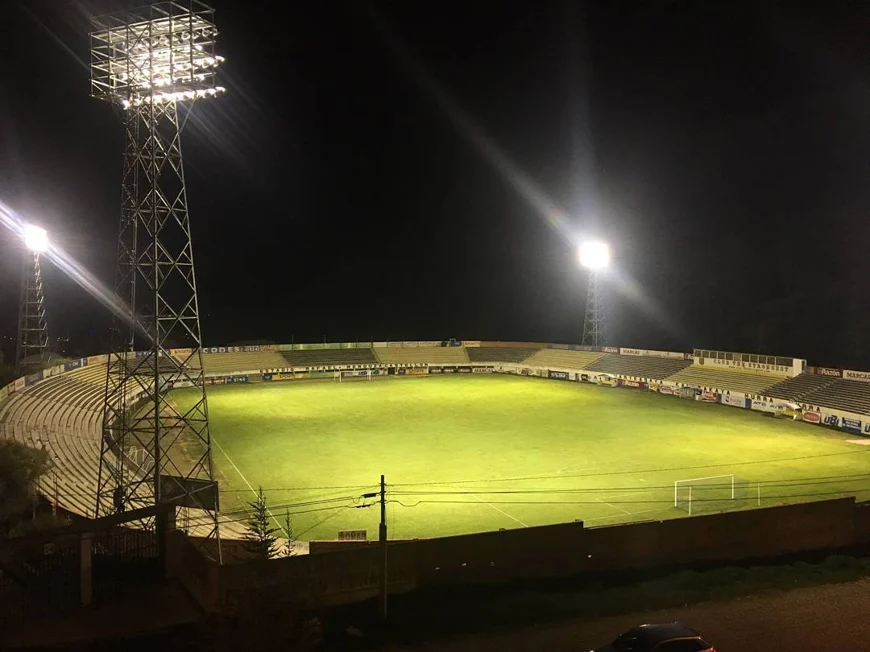
    • Stadiums
    • Parking lots
    • Roadways
    • Airports

They produced high lumen output but came with significant drawbacks:

    • Long warm-up times
    • Restrike delays after power interruptions
    • Color shift over time
    • Higher maintenance costs
    • Declining lumen output as lamps aged

These limitations eventually opened the door for LEDs.

The LED Revolution Begins

The first visible LED was demonstrated in 1962 by Nick Holonyak Jr., but early LEDs produced only red light and served primarily as indicator lamps in electronic devices.

Throughout the following decades, researchers expanded LED technology to produce additional colors while improving brightness and efficiency.

The breakthrough came in the 1990s with the development of high-brightness blue LEDs by Shuji Nakamura, Isamu Akasaki, and Hiroshi Amano. Combining blue LEDs with phosphor coatings made practical white LED lighting possible.

This innovation laid the foundation for the commercial LED lighting systems used today.


Discover How LED Lighting Changed the Industry

LED technology has transformed commercial and industrial lighting, but its success didn't happen overnight. From its invention in 1962 as a simple indicator light to today's high-performance lighting systems, decades of innovation have improved energy efficiency, light quality, reliability, and application possibilities across virtually every industry.

Explore the history of LED lighting to see how the technology has evolved, why it replaced traditional lighting systems, and what the future holds for smart lighting, connected controls, and next-generation LED solutions.

👉 Read: The History of LED Lighting: Then and Now

👉 Explore Stouch Turnkey Lighting Services

👉 Schedule a Call with the Stouch Lighting Team


Why LEDs Changed Commercial Lighting

LED technology did more than replace traditional light sources—it fundamentally changed how lighting systems are designed, operated, and maintained.

Modern commercial LED fixtures commonly deliver 150–200 lumens per watt or more, significantly outperforming older fluorescent, HID, and incandescent technologies.

Additional advantages include:

    • Long operating life
    • Excellent lumen maintenance
    • Instant-on operation
    • Superior optical control
    • Reduced maintenance requirements
    • Lower energy consumption
    • Improved color rendering
    • Minimal heat generation
    • Mercury-free construction

These benefits have made LEDs the standard lighting technology across nearly every commercial and industrial application.

Evolution of Lighting Technology Comparison

Technology

Typical Lifespan

Energy Efficiency

Maintenance

Common Applications

Fire & Torches

Hours

Very Low

Very High

Early settlements

Oil Lamps

Hundreds of hours

Low

High

Homes, temples

Candles

Dozens of hours

Low

High

Homes, churches

Incandescent

~1,000 hours

Low

High

Residential, early commercial

Fluorescent

15,000–30,000 hours

Moderate

Moderate

Offices, schools, healthcare

HID

10,000–24,000 hours

Moderate to High

High

Warehouses, parking lots, sports lighting

LED

50,000–100,000+ hours

Very High

Very Low

Nearly all commercial applications

Smart LED Systems

50,000–100,000+ hours

Highest (with controls)

Very Low

Connected commercial buildings


Lighting Is Now Part of the Building Network

The latest chapter in the history of lighting extends beyond illumination. Modern LED systems have transformed lighting into an intelligent building asset that supports energy management, operational efficiency, and data-driven decision-making.

Networked Lighting Controls (NLCs) enable facility managers to monitor, automate, and optimize lighting across individual buildings or entire portfolios through centralized software.

Today's connected lighting systems can incorporate:

    • Occupancy and vacancy sensors that reduce unnecessary energy consumption
    • Daylight harvesting that automatically dims fixtures when natural light is available
    • Scheduling and time-based controls for predictable operations
    • Wireless communication for simplified installation and scalability
    • Real-time energy monitoring and reporting
    • Remote diagnostics that identify fixture or driver issues before failures occur
    • Demand response capabilities that reduce electrical loads during utility peak events
    • Building Automation System (BAS) integration for coordinated facility management

Rather than simply turning lights on and off, modern lighting systems continuously respond to building conditions, occupant behavior, and utility demand. The result is lower operating costs, improved occupant comfort, reduced maintenance, and valuable operational data that helps facility managers make smarter decisions.

The Evolution of Lighting Design

As lighting technology advanced, lighting design shifted from simply producing more light to delivering the right light for each environment. Modern commercial lighting design evaluates precise photometric metrics that directly influence occupant comfort, safety, energy efficiency, and operational performance.

Key design considerations include:

    • Illuminance: Measured in foot-candles or lux to ensure workspaces provide the proper light levels for productivity and safety.
    • Unified Glare Rating (UGR): A standardized scale that measures visual discomfort caused by glare, helping reduce eye strain in offices, healthcare facilities, classrooms, and other occupant-focused environments.
    • Color Performance: Designers evaluate both the traditional Color Rendering Index (CRI) and the newer TM-30 standard. TM-30 measures color fidelity (how accurately colors appear) and color gamut (how vivid colors appear), ensuring products on a retail floor, architectural finishes, or manufactured components look exactly as intended under artificial light.
    • Correlated Color Temperature (CCT): Measured in Kelvin, CCT determines whether light appears warm or cool, allowing designers to create environments that support focus, comfort, or ambiance depending on the application.
    • Optical Distribution: Precision optics place light exactly where it's needed, improving uniformity while reducing wasted light, glare, and unnecessary energy consumption.

Advanced photometric modeling brings these metrics together to optimize fixture placement, helping commercial facilities improve visibility, reduce operating costs, enhance occupant experience, and achieve long-term lighting performance.


What Is the Future of Lighting Technology?

The future of lighting extends far beyond energy-efficient fixtures. Modern LED systems are becoming intelligent building assets that combine high-performance illumination with edge computing, advanced sensors, and artificial intelligence to improve facility operations.

Human-Centric Lighting (HCL)

Human-Centric Lighting dynamically adjusts color temperature (CCT) and light intensity throughout the day to better align with natural circadian rhythms. Cooler, brighter light can promote alertness during working hours, while warmer lighting later in the day creates a more comfortable environment for occupants.

AI-Driven Lighting Optimization

Artificial intelligence continuously analyzes occupancy patterns, daylight availability, weather conditions, and utility demand to optimize lighting performance automatically. These systems reduce energy consumption while maintaining appropriate illumination levels without constant manual adjustments.

Digital Twins

Connected lighting systems increasingly feed real-time operational data into digital twins—virtual models of physical buildings. Facility managers can monitor fixture performance, identify failing drivers or sensors before they become critical, and plan maintenance proactively instead of reacting to unexpected outages.

Internet of Things (IoT) Integration

LED fixtures are becoming connected endpoints within the Internet of Things (IoT). Lighting systems now communicate with HVAC equipment, security systems, occupancy sensors, and building automation systems (BAS), allowing facilities to improve energy efficiency while collecting valuable operational data.

Grid-Interactive Buildings

As utilities modernize the electrical grid, connected lighting systems are playing a larger role in demand response and load management programs. Intelligent lighting can automatically reduce energy consumption during peak demand periods, helping organizations lower operating costs while supporting grid reliability.

FAQ

Why is LED lighting considered the biggest advancement in modern lighting?

LED lighting combines high energy efficiency, long operating life, excellent optical control, and compatibility with smart lighting controls. Unlike previous lighting technologies, LEDs can also integrate with building automation systems to improve energy management and operational efficiency.

Can modern LED lighting integrate with existing building automation systems?

Yes. Many commercial LED lighting systems integrate with Building Automation Systems (BAS) through standard communication protocols, allowing facility managers to coordinate lighting with HVAC, occupancy sensors, security systems, and energy management platforms.

Why did commercial buildings switch from fluorescent and HID lighting to LEDs?

Commercial facilities adopted LEDs because they consume less energy, require less maintenance, provide better light quality, and last significantly longer than fluorescent or HID fixtures. Many LED upgrades also qualify for utility rebates, reducing the overall cost of modernization.

What role do smart lighting controls play in modern buildings?

Smart lighting controls automatically adjust lighting based on occupancy, daylight availability, schedules, or energy demand. They help reduce electricity consumption, improve occupant comfort, and provide facility managers with valuable operational data through connected building systems.

How has lighting technology influenced commercial building design?

Advances in lighting technology have changed how commercial spaces are designed by improving visibility, reducing energy consumption, supporting occupant well-being, and enabling integrated building management. Modern lighting design considers factors such as illuminance, glare control, color quality, and intelligent controls alongside aesthetics.

Conclusion

The history of lighting reflects humanity's continual pursuit of safer, more efficient, and more intelligent ways to illuminate the built environment. From open flames and oil lamps to electric lighting, fluorescent fixtures, HID systems, and today's connected LED technology, each innovation has expanded what's possible for commercial buildings.

As lighting continues to evolve, selecting the right solution has become increasingly complex. Modern projects require more than choosing fixtures—they demand thoughtful lighting design, accurate photometric analysis, manufacturer-neutral product selection, and systems that support long-term energy performance and connected building technologies.

Whether you're planning a new construction project, upgrading an existing facility, or implementing intelligent lighting controls, Stouch Lighting helps organizations navigate today's rapidly evolving lighting landscape. Our team provides manufacturer-neutral lighting design, specification, procurement, and distribution services that deliver high-performance solutions built for the future.