5 Minute Read


Key Points at a Glance

  • An LED upgrade replaces fluorescent, metal halide, or high-pressure sodium fixtures with energy-efficient LED lighting technology
  • Common commercial lighting issues include flickering lamps, uneven light levels, and rising maintenance demands
  • LED upgrade benefits often include 40–70 percent reductions in lighting energy use and lower maintenance costs

Many commercial facilities still rely on lighting systems that were installed decades ago. Over time, outdated fluorescent, metal halide, or high-pressure sodium fixtures can fall short of today’s expectations for safety, efficiency, and occupant comfort. Inconsistent light levels, rising maintenance costs, and unnecessary energy use are all common challenges facility managers face with legacy lighting infrastructure.

Recognizing these common commercial lighting issues is often the first step toward identifying a practical solution.

What problems do LED upgrades solve?

Flickering and inconsistent light levels

Facility managers frequently encounter fixtures that flicker during start-up, lamps that dim at different rates, and rooms that never appear evenly lit. Fluorescent and metal halide systems degrade unpredictably, leading to inconsistent brightness across classrooms, offices, and production areas. These conditions affect concentration, increase eye strain, and generate frequent work orders. An LED upgrade replaces those unstable sources with solid-state fixtures that decline slowly and uniformly, allowing maintenance to be scheduled instead of rushed.

Rising maintenance demands

Legacy lighting requires constant attention. Ballasts fail, lamps burn out, and high-bay fixtures demand lifts or outside contractors for every replacement. The labor required to keep old systems running often costs more than the electricity they consume. LED lighting technology lasts years longer than fluorescent or HID lamps, reducing service calls and eliminating the cycle of spot replacements that leave spaces looking uneven.

Escalating energy and utility costs

Conventional lighting wastes a large share of electricity as heat. Warehouses, schools, and retail centers with long operating hours feel this inefficiency the most. An LED upgrade typically cuts lighting energy use by 40–70 percent, and many facilities see even greater savings when controls are added. Lower kilowatt-hour consumption immediately reduces monthly bills and peak demand charges.

Poor visibility and outdated appearance

Yellow high-pressure sodium light, dark parking areas, and uneven interior color can make a property feel unsafe or neglected. Low color rendering and uncontrolled glare affect how customers and employees experience a space. LED upgrade benefits include higher CRI, stable color temperature, and precise optics that deliver consistent foot-candle levels indoors and out, improving both safety and aesthetics.

Difficulty meeting sustainability goals

Many organizations are under pressure to reduce emissions and document progress. Aging lighting systems make those targets hard to reach. Because LEDs use far less power and contain no hazardous materials, an LED upgrade quickly lowers a building’s environmental footprint and often qualifies for utility rebates that accelerate payback.

Schedule Your Consultation Reminder Email HeaderWhat are the commercial LED upgrade benefits

Lower maintenance through solid-state LED design

LED fixtures last four to forty times longer than fluorescent or HID lamps. Without fragile filaments or pressurized gases, components resist vibration and temperature changes common in commercial buildings. Fewer failures mean fewer lifts, fewer closures, and predictable budgets.

Better visual performance with accurate color

Unlike sodium vapor lighting that casts a yellow haze, LEDs reflect true object colors and maintain consistent brightness over time. Higher CRI and precise optics support detailed tasks in offices, production areas, and educational settings.

Energy savings through diode-based light production

Reduced wattage directly lowers operating costs. Facilities that convert from metal halide or fluorescent lighting often see a 40–70 percent drop in lighting energy use. These reductions support sustainability goals and frequently qualify for utility rebates.


Case Study: Parking Lot LED Upgrade Delivers Measurable Results
RJ_WatersUpgrading the R.J. Waters & Associates Facility

The Problem
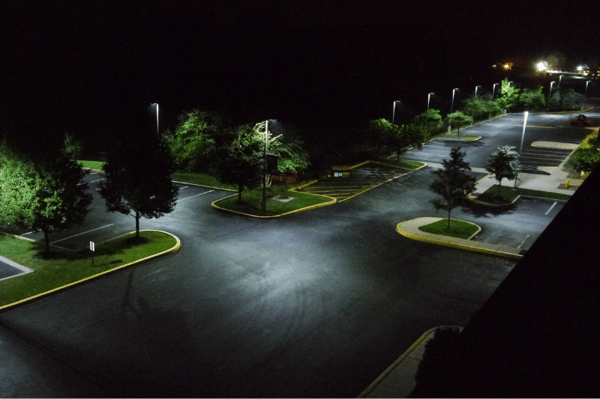
The facility relied on 1,000-watt high-pressure sodium fixtures that were nearing the end of life. Light levels no longer met site requirements, and maintenance costs were increasing. The height of the poles required specialized equipment for each repair, resulting in recurring service costs and extended downtime.

The Solution
A one-for-one replacement was completed,
converting 1,000-watt HPS fixtures to 168-watt LED parking lot luminaires with a 4000K color temperature. The new system was designed to improve uniformity, security camera visibility, and overall site safety.

The Measurable Results (12 months post-installation)

 Metric   Annual Savings / Impact 

Energy Reduction

179,755 kWh saved

Direct Cost Savings

$14,902 lighting energy only

Maintenance Savings

$4,118 from eliminated lifts and labor

Carbon Footprint

21,507 lbs GHG reduction

Project ROI Boost

$9,963 utility rebate secured

What does a successful LED upgrade process look like?

The documented kilowatt-hour reduction enabled the project to meet the utility efficiency tier required for rebate approval, offsetting a significant portion of the initial project cost and improving overall payback.

A professional upgrade begins with a lighting audit that measures foot-candles, energy use, and fixture condition. Designers match LED optics and color temperature to each application, whether warehouse aisles, classrooms, offices, or parking areas. Installation is scheduled to minimize disruption, and post-project verification confirms kilowatt-hour and maintenance savings.

Frequently Asked Questions

What is an LED Upgrade

The process of upgrading existing fluorescent, metal halide, or high-pressure sodium lighting fixtures by replacing internal components with modern LED technology while keeping the original fixture housing in place.

This approach improves energy efficiency, extends system life, and enhances overall light quality without the disruption or cost of a full electrical rebuild.

How much energy can an LED upgrade save?

Most commercial facilities reduce lighting energy use by 40–70 percent after converting from fluorescent, metal halide, or high-pressure sodium systems. Actual savings depend on operating hours, fixture wattage, and the addition of lighting controls.

How long do LED fixtures last compared to traditional lighting?

LED fixtures can last between 50,000 and 100,000 hours, which is four to forty times longer than many conventional lighting systems. This extended lifespan significantly reduces replacement frequency and maintenance labor.

Will an LED upgrade improve lighting quality?

Yes. LED lighting technology offers higher Color Rendering Index (CRI), stable color temperature, and more consistent foot-candle levels than many legacy lighting sources. These improvements enhance visibility, safety, and occupant comfort.

Do LED upgrade projects qualify for rebates?

Many utility providers offer financial incentives for commercial LED upgrade projects that reduce energy consumption. Eligibility is typically based on documented kilowatt-hour savings and equipment performance.

How do I know if my facility is a good candidate for an LED upgrade?

Buildings experiencing flickering lights, rising maintenance costs, poor visibility, or high utility bills are often strong candidates. A professional lighting audit can confirm potential savings and project feasibility.

Key Lighting Terms

Color Rendering Index (CRI): measures how accurately a light source displays colors compared to natural daylight. Higher CRI values improve visibility and make environments safer and more comfortable for occupants.

Wattage: indicates how much electrical power a lighting fixture consumes. Lower wattage LED fixtures can often produce the same or greater light output than higher wattage legacy systems.

Kilowatt-Hour (kWh): the standard unit used to measure energy consumption. Reducing KWh usage through an LED upgrade directly lowers monthly utility costs.

Color Temperature (Kelvin): describes the appearance of light, measured in Kelvin (K). Lower values create warmer tones, while higher values produce cooler, brighter light suited to workspaces and exterior areas.

Foot-Candles: measure the amount of light that reaches the surface. Maintaining consistent foot-candle levels helps ensure adequate visibility in commercial and industrial environments.

Is your building ready for an LED upgrade?

If your facility experiences flickering lamps, high utility costs, or poor visual conditions, it could indicate deeper-rooted problems. LED lighting technology offers a reliable path to lower expenses and better environments across commercial, educational, industrial, municipal, and real estate properties.

Our team guides organizations through assessment, ROI analysis, and project execution so the LED upgrade benefits are clear before the first fixture is installed. Reach out to discuss how an LED upgrade can solve the common commercial lighting issues affecting your space.