8 Minute Read

This blog was originally published July 5, 2016, and has been updated October 28, 2026.

The main advantages of LED lighting are lower electricity consumption, longer useful life, reduced maintenance, precise light distribution, and compatibility with advanced controls. For commercial buildings, these benefits can improve visibility while reducing the cost of operating warehouses, retail facilities, offices, schools, parking areas, and multi-site properties.

Results depend on the complete lighting system. Fixture efficiency, driver quality, operating temperatures, installation conditions, and control settings determine how much an LED upgrade saves and how reliably it performs.

Key Takeaways

Commercial LED lighting benefits extend beyond replacing a high-wattage lamp with a lower-wattage alternative.

What are the main benefits of LED lighting for commercial buildings?

    • LED upgrades can substantially reduce lighting electricity consumption, with savings determined by the existing equipment and replacement design.
    • Longer useful life can reduce replacement labor, lift rentals, and operational disruption.
    • Suitable optics, color rendering, and color temperature improve illumination for specific tasks.
    • Dimming, occupancy sensing, and networked controls reduce unnecessary lighting operation.
    • Temperature ratings, environmental protection, and serviceability influence long-term performance.

How Does LED Lighting Compare with Traditional Commercial Lighting?

The following ranges provide a general comparison. Actual performance varies by lamp type, wattage, ballast, fixture construction, and operating conditions.

Technology

Representative rated lifespan

Representative luminous efficacy

Typical CRI

Hot restrike after a brief power interruption

Commercial LED

50,000–100,000 hours of specified lumen maintenance

Approximately 100–180+ LPW for complete fixtures

70–90+

Generally immediate when power returns

Metal halide

Approximately 6,000–24,000 hours

Approximately 65–115 LPW for lamps

60–90, depending on lamp chemistry

Several minutes; some conventional systems require 10–20 minutes

Fluorescent T8/T5HO

Approximately 20,000–60,000 hours, depending on lamp and switching cycle

Approximately 75–105 LPW for lamps

80–90 for many commercial lamps

Generally immediate with a suitable electronic ballast

High-pressure sodium

Approximately 24,000–40,000 hours

Approximately 80–140 LPW for lamps

Approximately 20–30 for standard lamps

Commonly approximately 1–4 minutes

LED lumen-maintenance ratings describe retained light output, while traditional lamp-life ratings generally describe survival within a tested population. These are different measurements.

The efficacy figures also use different boundaries: LED fixture values include driver and optical losses, while traditional lamp values exclude ballast and fixture losses. Compare complete-system input power and delivered illumination before making purchasing decisions.

1. Longer LED Lighting Lifespan

Many commercial LEDs specify 50,000 to 100,000 hours of lumen maintenance, potentially reducing replacement frequency compared with traditional lighting. At 12 hours daily, that represents approximately 11.4 to 22.8 years of operation under the stated conditions.

L70 means the source retains 70% of its initial light output, representing a 30% reduction. That loss can become noticeable or leave a space below its required illumination, but L70 is not a universal threshold at which human vision suddenly detects dimming. L80 and L90 indicate 80% and 90% retained output. Compare ratings at the same operating hours and temperature; none guarantees that drivers or other components will last equally long.

For warehouses and parking areas, longer service intervals can mean lower maintenance costs, particularly where replacement requires lifts, traffic restrictions, or production interruptions.

2. Greater LED Energy Efficiency

LED upgrades can reduce lighting electricity consumption by approximately 50%–75% in suitable legacy HID applications, although savings vary. LEDs generate light through solid-state semiconductor conversion, and efficient fixtures deliver useful illumination with less electrical input.

Luminous efficacy measures lumens per watt. Useful lumens concern the light reaching the intended area. Savings must account for both: replacing four-lamp or six-lamp fluorescent high bays can produce approximately 40%–50% savings in appropriately designed projects, but efficient existing systems may yield less.

For an illustrative warehouse operating 100 fixtures for 4,000 hours annually, the following calculation shows the effect of replacing a metal halide system:

Measurement

Existing metal halide system

Proposed LED system

Input power per fixture

458W, including ballast

150W

Annual electricity consumption

183,200 kWh

60,000 kWh

Annual electricity cost at $0.15/kWh

$27,480

$9,000

Annual electricity savings

—

$18,480, or approximately 67%

Annual savings = reduced input watts × fixture quantity × annual operating hours ÷ 1,000 × electricity rate.

Use complete fixture input watts, and confirm that the proposed layout maintains suitable illumination.

For a few comparisons between LEDs and the rest of the lighting technologies out there, read the following links:


3. Lower Heat Gain in Conditioned Buildings

Lower-wattage LED fixtures reduce sensible internal heat gain, which can lower cooling demand and cooling-system run-times in conditioned commercial facilities. Replacing a 458W lighting system with a 150W fixture reduces electrical input by 308W while operating.

LEDs still generate heat, and their housings can become hot. Much of the electricity used by indoor lighting ultimately becomes heat within the building, including light absorbed by surfaces. The HVAC benefit comes primarily from reduced input wattage. Actual cooling savings depend on climate, operating schedules, HVAC efficiency, and where heat enters the conditioned space; winter heating demand may increase.

Offices, schools, and retail facilities can evaluate lighting and HVAC savings together. Proper fixture selection and glare control also support campus and outdoor safety.

4. Compact Light Sources

Small LED packages allow manufacturers to build thin panels, compact downlights, and integrated display lighting that would be difficult to create around larger traditional lamps.

The complete fixture still needs space for drivers, optics, wiring, and thermal management. A smaller light source does not automatically mean a smaller installation footprint or suitability for an enclosed ceiling cavity.

Offices can use shallow fixtures where ceiling space is limited, while retailers can integrate lighting into shelving. These applications reflect the history of LED lighting and the broader evolution of lighting.

lighting design services

5. Better Color Rendering Options

Commercial LEDs offer CRI ratings of 80 or higher, with 90-plus options for applications requiring greater color fidelity.

CRI compares object colors under a light source with an appropriate reference. ANSI/IES TM-30 adds Rf, a fidelity index describing average color similarity, and Rg, a gamut index describing average changes in color saturation. Rg near 100 indicates similar average gamut area to the reference; higher values are not automatically better. Incandescent lamps already have excellent CRI, so LEDs do not universally improve color rendering.

Retailers can evaluate CRI, Rf, and Rg together when selecting lighting for merchandise. Schools and offices can prioritize accurate, consistent colors without specifying unnecessarily demanding performance.

6. More Precise Directional Illumination

LED packages commonly emit light across approximately 120°–180°, allowing fixture optics to direct illumination toward work surfaces, aisles, and parking areas.

Metal halide, high-pressure sodium, and fluorescent lamps generally emit around the source, requiring reflectors to redirect light. Internal absorption and obstruction reduce delivered output: a fixture with 70% optical efficiency loses 30% of its lamp lumens before light exits. Actual losses vary and can be higher or lower. LEDs also experience optical losses, and finished LED fixtures can produce broad or indirect distributions.

Warehouses can use aisle optics to illuminate shelving and walking surfaces. Parking areas can use controlled distributions and shielding to reduce spill light while maintaining coverage.

7. Greater Lighting Design Flexibility

LED technology supports recessed, suspended, linear, wall-mounted, and pole-mounted fixtures for different commercial applications.

Design flexibility does not eliminate the need for calculations. Mounting height, spacing, surface reflectance, glare, and obstructions determine whether the selected arrangement delivers adequate illumination.

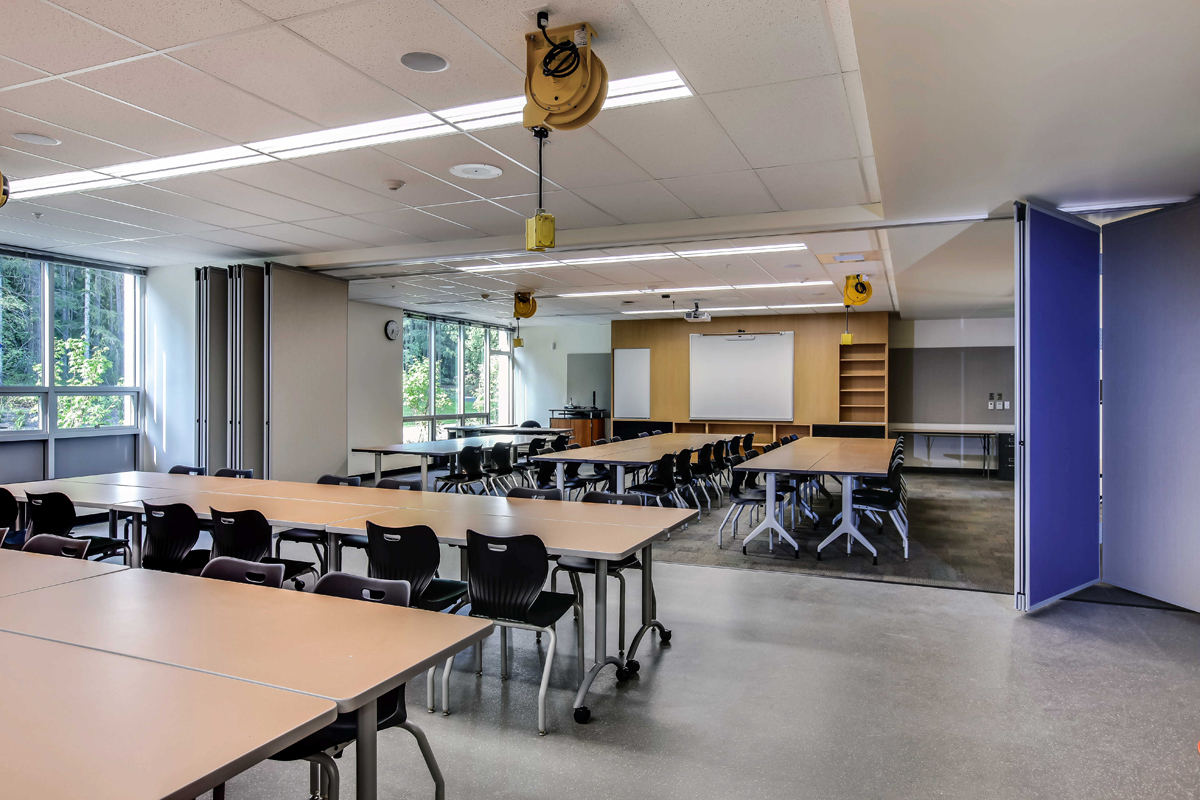
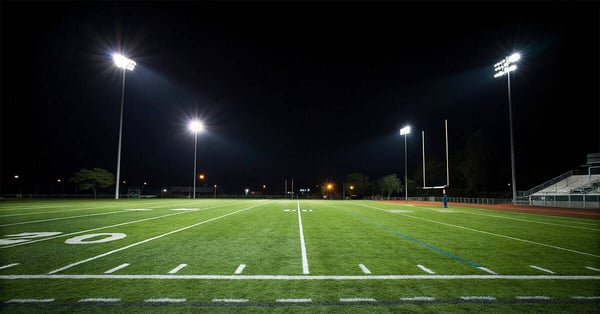
A school may combine broad classroom lighting with focused task lighting. Retail facilities may use product accents, while stadium lighting requires controlled long-distance distribution. Multi-site properties can standardize core specifications while adapting layouts to individual buildings.


Turn the Advantages of LED Lighting into Long-Term Savings

Upgrading from traditional lighting to LED technology offers more than improved energy efficiency. Longer fixture lifespans, reduced maintenance requirements, improved lighting quality, and greater control can help commercial facilities lower operating costs while creating better lighting environments. A strategically planned LED retrofit can help organizations maximize these advantages while minimizing disruptions to daily operations.

Explore our Turnkey Commercial LED Lighting Retrofit & Upgrade Services to see how Stouch Lighting supports commercial lighting projects from initial evaluation and product selection through installation and project completion. Then, tell us about your lighting project and let our team help you identify the right LED solutions to meet your performance requirements, budget, and long-term goals.

👉 Explore Our Turnkey Commercial LED Lighting Retrofit & Upgrade Services

👉 Tell Us About Your Lighting Project


8. Durable Solid-State Construction

LEDs produce light without fragile filaments or fluorescent discharge tubes, supporting durable fixture designs for demanding environments.

Durability depends on tested construction. IK08, IK09, and IK10 classify impact resistance at 5, 10, and 20 joules, respectively. IP65 indicates a dust-tight enclosure protected against water jets; IP66 adds protection against powerful water jets. These ratings do not establish corrosion resistance, submersion suitability, or protection against every impact.

Loading docks and industrial facilities can specify appropriate IK ratings where impacts are likely. Parking areas and exposed service locations can use suitable IP ratings alongside wet-location listings and corrosion-resistant materials.

9. Dimming and Advanced Lighting Controls

Compatible LED systems reduce electricity use by adjusting illumination to occupancy, daylight, schedules, and task requirements.

Luminaire-Level Lighting Controls (LLLC) integrate occupancy and ambient-light sensing at individual fixtures. Wireless networked lighting controls (NLC) connect fixtures and sensors without requiring new control wiring between every device, helping address retrofit wiring constraints. Fixtures still need suitable power connections, and wireless coverage, commissioning, and driver compatibility remain essential.

Offices can dim perimeter fixtures when daylight is available, while warehouses can reduce output in unoccupied aisles. Multi-site operators can use networked systems to coordinate schedules and review performance across properties.

10. Instant Illumination and Effective Switching

LEDs generally restore usable illumination immediately when power returns, avoiding the hot-restrike delays associated with many HID systems.

Some conventional metal halide systems require approximately 10–20 minutes to cool, restrike, and recover after an interruption. Other HID systems restart faster; high-pressure sodium commonly restrikes within approximately 1–4 minutes. LEDs avoid the lamp cooling delay, although driver and control startup times still apply. Instant restart also does not replace required emergency lighting during an outage.

Warehouses, school gyms, and parking facilities can avoid prolonged recovery delays after brief interruptions. LEDs also suit occupancy-based switching, provided drivers and switching equipment meet the application’s operating requirements.

11. Reduced Mercury Use and Environmental Impact

LED light sources do not require mercury, unlike fluorescent lamps and many HID lamps.

Lower electricity consumption can reduce electricity-related emissions, depending on the generation mix. Longer service intervals may also reduce replacement materials and transportation. However, LED fixtures contain electronics and other materials requiring responsible recycling; they are not environmentally impact-free.

Commercial properties replacing fluorescent lamps or HID equipment should arrange appropriate handling for removed lamps and establish a recycling process for future LED replacements.

12. Very Low Ultraviolet Emissions

Typical white LEDs used for general illumination produce very little ultraviolet radiation, reducing one source of damage to UV-sensitive materials.

Visible light can still fade fabrics, artwork, and finishes. Exposure intensity, duration, and spectrum remain important, and specialty UV LEDs belong to a separate product category.

Retailers can use suitable white LEDs for merchandise displays, while schools and commercial galleries can combine low-UV sources with controlled exposure times and appropriate light levels.

13. Low-Voltage System Options

LED technology supports 12V and 24V lighting systems for display cases, architectural accents, and other suitable applications.

Many commercial fixtures still connect to building line voltage through a driver. Low wattage does not mean low supply voltage, and low-voltage systems still require appropriate wiring, power supplies, and electrical protection.

Retail facilities can use low-voltage display lighting where appropriate. For outdoor lighting applications, specify the required environmental ratings and listings; low voltage alone does not establish suitability for flooding or submersion.

14. Effective Cold-Weather Performance

Properly rated LEDs can provide rapid illumination in cold environments where fluorescent systems may start poorly or deliver reduced output.

Below 32°F (0°C), fluorescent systems not rated for cold starting can struggle to ignite, flicker, or fail to start. Cold lamps can also suffer substantial lumen depression, meaning reduced light output, even when a suitable ballast starts them. Performance varies by lamp and ballast combination. LEDs likewise require suitable minimum-temperature ratings, while excessive heat can shorten their useful life.

Cold-storage warehouses and winter parking applications can benefit from appropriately rated LEDs. Check drivers, sensors, and emergency batteries separately, and assess high ceiling temperatures when specifying fixtures for industrial spaces.

15. More Color Temperature Choices

LEDs offer white-light options such as 3000K, 3500K, and 4000K, allowing commercial properties to select a consistent warmer or cooler appearance.

Correlated color temperature, or CCT, describes light appearance rather than brightness or color accuracy. Some fixtures offer selectable or tunable white settings, but matching CCT alone does not guarantee identical appearance between products.

Retail and hospitality spaces can select warmer light for their intended atmosphere. Offices, schools, and multi-site properties can establish consistent CCT specifications while evaluating samples for visual comfort and color consistency.

Lighting problems list

Frequently Asked Questions

What are the disadvantages of commercial LED lighting?

Potential drawbacks include initial project costs, difficult repairs in sealed fixtures, and differences in replacement component availability. Evaluate installation costs, serviceability, warranty coverage, and replacement support alongside projected savings.

Do commercial LED upgrades require replacing every fixture?

No. Depending on the existing equipment, a project may use replacement lamps, listed retrofit kits, or new fixtures. A qualified installer should assess wiring, sockets, fixture condition, and product instructions before selecting an approach.

Which product databases should businesses check before applying for LED rebates?

Check the DesignLights Consortium (DLC) Qualified Products List (QPL) for applicable commercial fixtures and the DLC NLC QPL for qualifying control systems. Verify the exact model and configuration against the utility’s current requirements.

Consult the ENERGY STAR Product Finder registry where the utility requires an eligible product category, such as qualifying downlights. ENERGY STAR ended its broad lamps and luminaires specifications on December 31, 2024, while retaining a separate downlights program. Historical certification does not automatically establish current rebate eligibility.

Confirm preapproval requirements before purchasing equipment or removing existing lighting. Database listing alone does not guarantee an incentive.

Request a Commercial Lighting Audit or Photometric Layout

Turn projected LED lighting benefits into a measurable project plan. Contact Stouch Lighting to request a facility lighting energy audit or discuss a photometric layout for a turnkey LED upgrade.

An audit can establish existing wattage, operating hours, maintenance needs, and potential savings. A photometric layout can evaluate fixture placement, maintained light levels, uniformity, and glare before equipment is ordered.

Explore LED lighting conversion options and more information on LED technology to prepare for your facility or multi-site project.